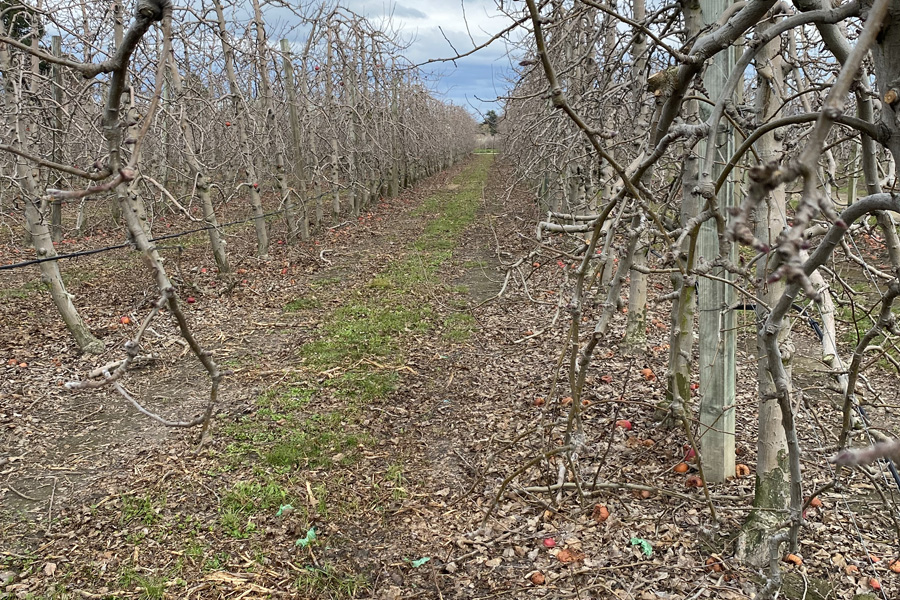
Winter oil-based insecticides are a vital part of an effective orchard pest control programme. Oil-Mate II makes sure the oil spreads to get the job done right.
Oil-Mate® ll helps deliver the ultimate winter clean-up
Winter oil-based insecticides are a vital part of an effective orchard pest control programme. But they come with a bit of a challenge. Oil is not the greatest at spreading. And effective coverage and penetration is essential if you want to get the job done right.
David Lingan, UPL NZ Ltd’s Adjuvant Product Manager, says the use of adjuvants mean the oil products orchardists are investing in aren’t wasted and will perform to their full potential. “Oils work physically. Ideally, what they do is cover insects, and even eggs, and just smother them. Then it’s ‘light’s out’!”
However, he warns, orchardists need to choose wisely. “Not all adjuvants are created equal. You can’t just substitute one adjuvant for another. Oil-Mate II, as the name suggests, is specifically developed to combine only with oil products. The two work hand in hand. They are the perfect complement for each other.”
Unique partner for winter oils
David says Oil-Mate II is a unique product - unbeatable for getting to even hard to reach spots on a plant, which is critical to protecting valuable trees and vines. “Using Oil-Mate means coverage is very thorough.”
He advises using winter oils early when plants are dormant for insect control. “It provides a really good winter clean-up. It’s ideal for tackling mite eggs, scale insects, aphids, and even powdery mildew.”
Oil-Mate II is a second generation, very low use rate, silicone-based adjuvant and designed for addition to mineral spray oils. It ensures actives reach under the bark, and into any cracks and crevices in trees and vines.
David explains the product works by reducing the surface tension of the oil. “That reduced surface tension means the oil can spread over a much larger area than would normally be possible – up to 5 times greater* than if you weren’t using Oil-Mate II.
“You achieve better coverage and improved contact and control of any lurking insects.” He says the oil will then smother any pests and insect eggs that may be lying dormant.
Oils are used across a wide range of crops for effective insect control; these include grapevines, kiwifruit, citrus, avocados, pip and stone fruit.
Particularly Armoured scale insects are one of the biggest problems in kiwifruit. Sucking insects (including mites, thrips, and aphids) are insidious pests which literally suck the life out of plants. In kiwifruit, scale insects reduce productivity, primarily by attacking young wood on vines. They can also sit on fruit causing it to be binned. “It’s not visually appealing. And not what the market wants.” The same is true for avocados.
David has one important proviso on Oil-Mate II use: “Always premix Oil-Mate with the oil first. Then add it to the sprayer.”
Increase orchard efficiencies by adding Du-Wett
David says, for lower water volume spraying, Du-Wett® Super-Spreader, which reduces water surface tension, can be used to achieve even more orchard efficiencies. “Using both, you’ve got two highly efficient, targeted adjuvant system working in tandem. It means you use less water and, at the same time, get improved spread. There are also fewer passes, reduced fuel use because you’re not refilling as often, and less time in the block. Those are quantifiable savings. At the same time, more and better spray deposition means less waste - so the product goes just where it’s intended.
As with any insect pest control, David says vigilance is important. “Nothing beats it. And, scale insects, especially, can be present in shelter belts and other nearby trees.”