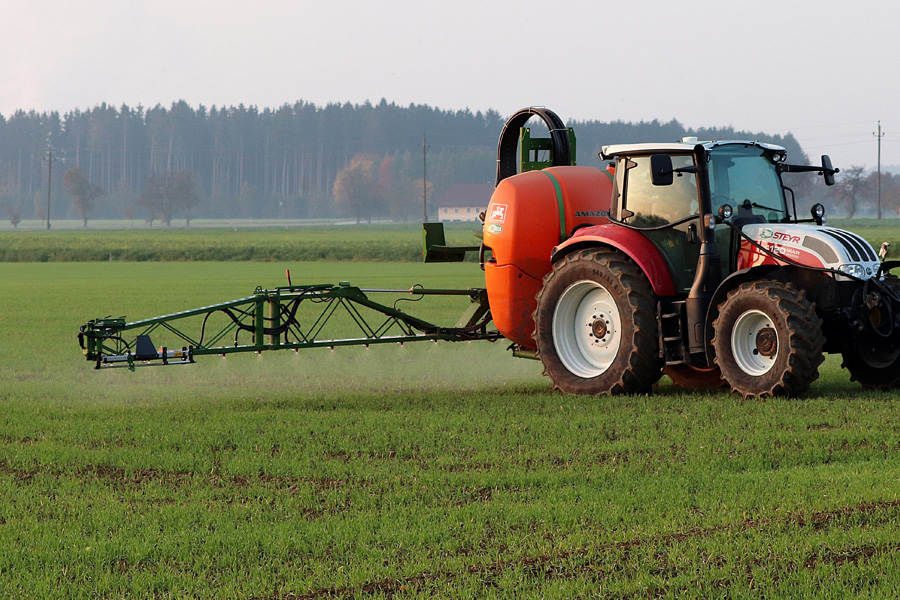
Crop protection products can’t always cram everything in. That’s where adjuvants play a big part.
An expert explains why your spray programme could be better
From time to time a spray programme might fail to live up to expectations. David Lingan, UPL NZ Ltd.’s Adjuvant Product Manager and passionate adjuvants advocate, says he may have at least part of the answer.
“Often, it’s because there’s something vital missing. Crop protection products can’t always cram everything in. That’s where adjuvants have a part to play. They provide attributes the actives don’t have.” He says these include rainfastness, optimum spreading and improved penetration.
By giving those extra benefits he says, adjuvants ensure you get the best out of herbicides, insecticides, and fungicides. Each of the products has a special role to play from optimising crop protection products’ efficacy and managing seasonal and climatic challenges to ‘softening’ water with X-Change, cleaning spray gear with All Clear 2X, and reducing drift using Li-1000. David says, “The ability to get sprays ‘to, on, and in’ are what adjuvants bring to the process.”
Why use adjuvants?
According to David, it’s a matter of savings, better work rate efficiency, and increasing crop protection efficacy. He says surfactants have a major role to play – especially in hard to wet crops like brassicas. ”Water (which is up to 90% of spray) has high surface tension – it doesn’t give you spread or coverage. Adding an adjuvant like a spreader (Actiwett) or super spreader (Du-Wett) will enhance the active’s performance.”
David says a “sticker”, or rainfast adjuvant like Bond Xtra or Du-Wett WeatherMax will help resist rain wash-off on recently-applied crops – protecting the active. “That way, what’s applied to the plant stays on the plant. It removes the risk of not having a level of protection or incurring extra costs of having to re-apply the crop protection product.”
Reducing drift is another way adjuvants have an important part to play in optimising sprays. David says, “You want to get every single droplet on target. An adjuvant such as Li-1000 reduces waste and improves efficacy. It’s more sustainable – it makes every droplet count. It’s also part of being a good neighbour.”
Tough weeds (like gorse and broom) need a penetrating organosilicone such as Slikka or Max-Spred, David says. “Those adjuvants, tank mixed with the herbicide, maximise performance. Like all plants, woody weeds have stomata, that is, breathing pores. The penetrants infiltrate these pores, so the herbicide gets into the plant. Without the penetrant adjuvant, the herbicide’s efficacy will be compromised.”